MONTMARTRE, 4ª edición. Feria digital de arte contemporáneo.
Del 1 de septiembre al 30 de diciembre de 2026
Cuatro meces de exposición, abierta las veinticuatro horas.
El vacío que sostiene
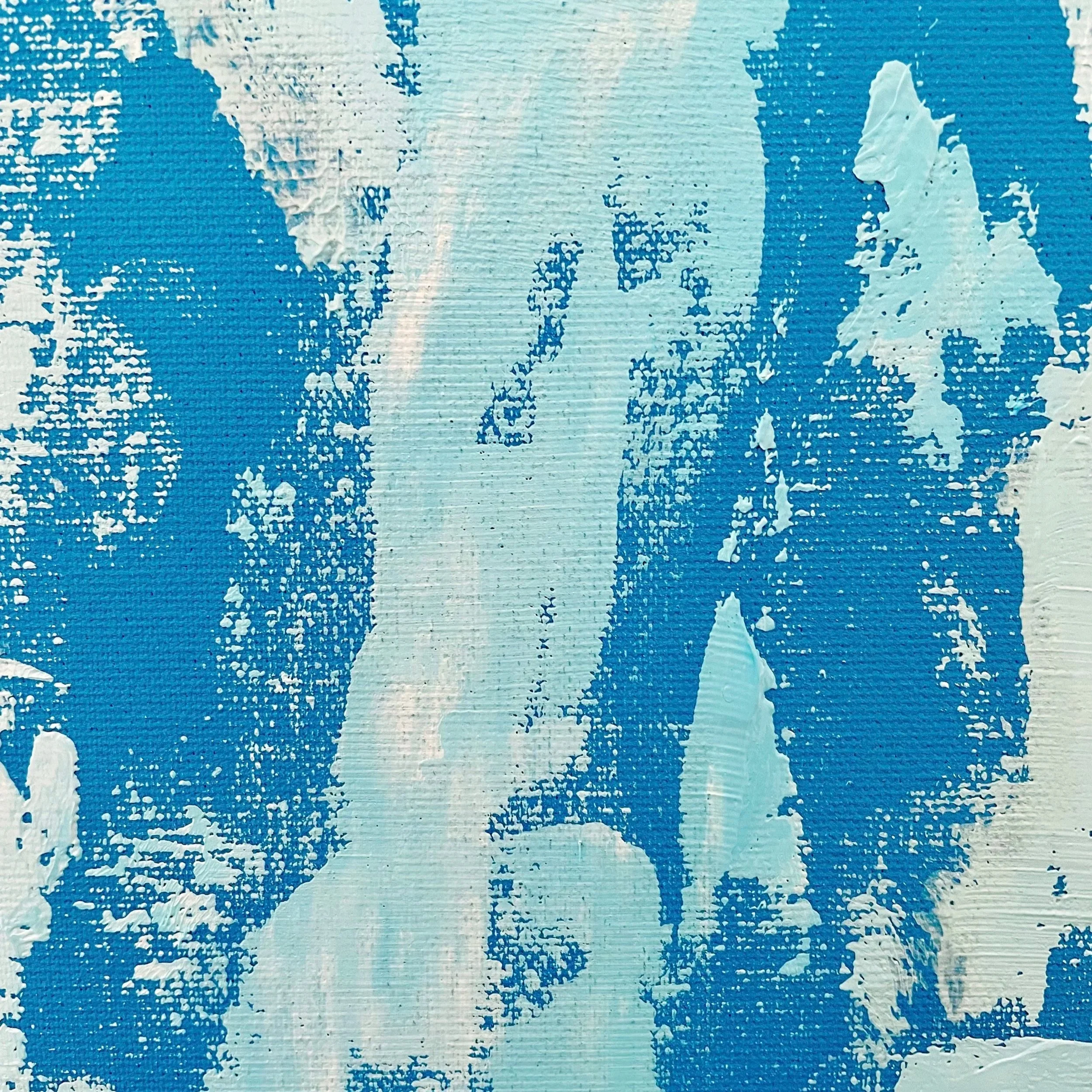
Una de las piezas se llama Ameba, el título no está puesto por capricho. nombra un cuerpo sin contorno fijo., algo que se desplaza vertiéndose y que en cada momento tiene una forma distinta. Conviene empezar justo ahí, por los bordes, porque en la pintura de Navka el borde es el sitio donde se forman las decisiones. la materia se adelgaza hasta que deja de ser masa y se incorpora al fondo sin que ninguna línea lo anuncie. no hay corte: hay pérdida de constancia, que es un fenómeno bien destino. De esa manera de terminar las formas se deduce casi todo lo demás.
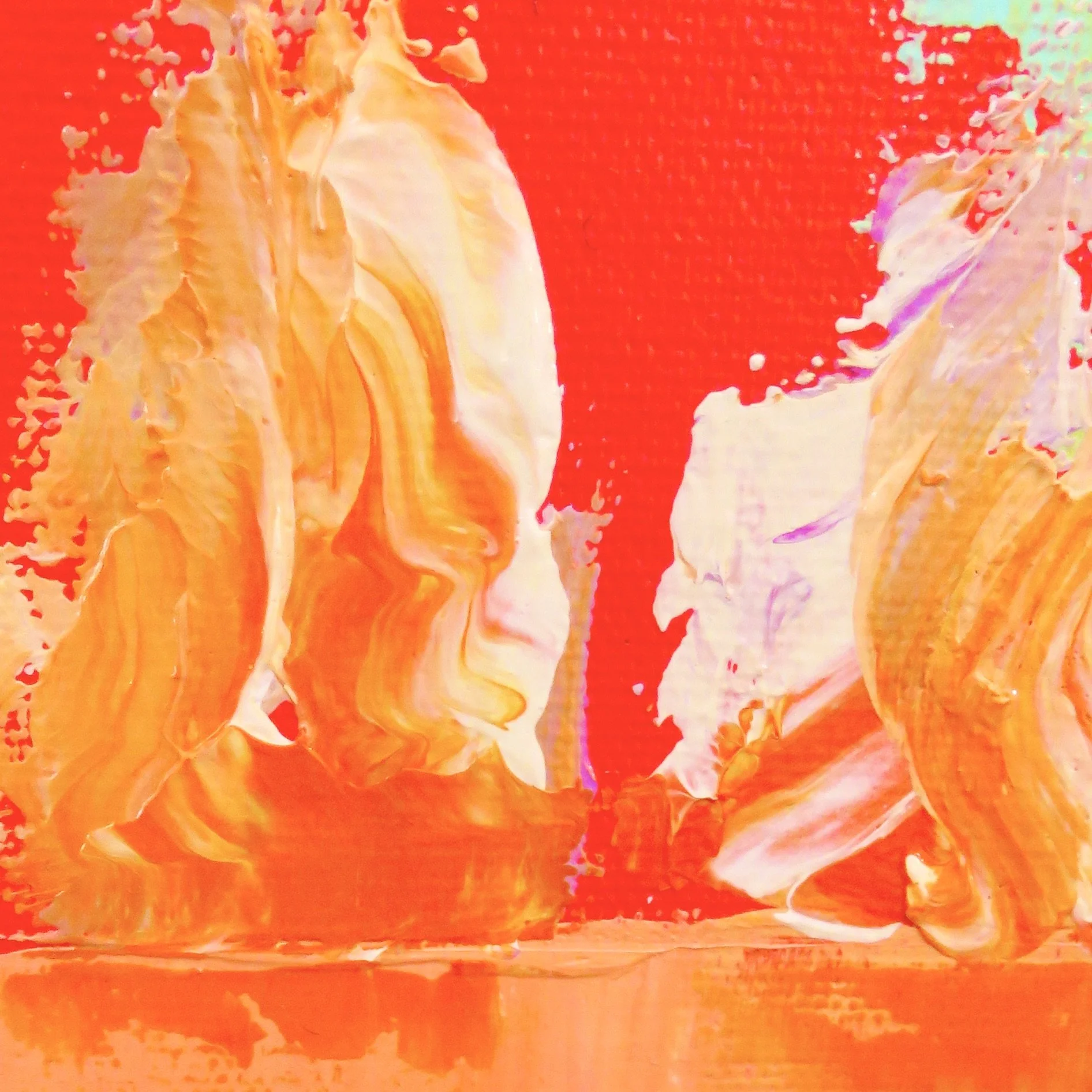
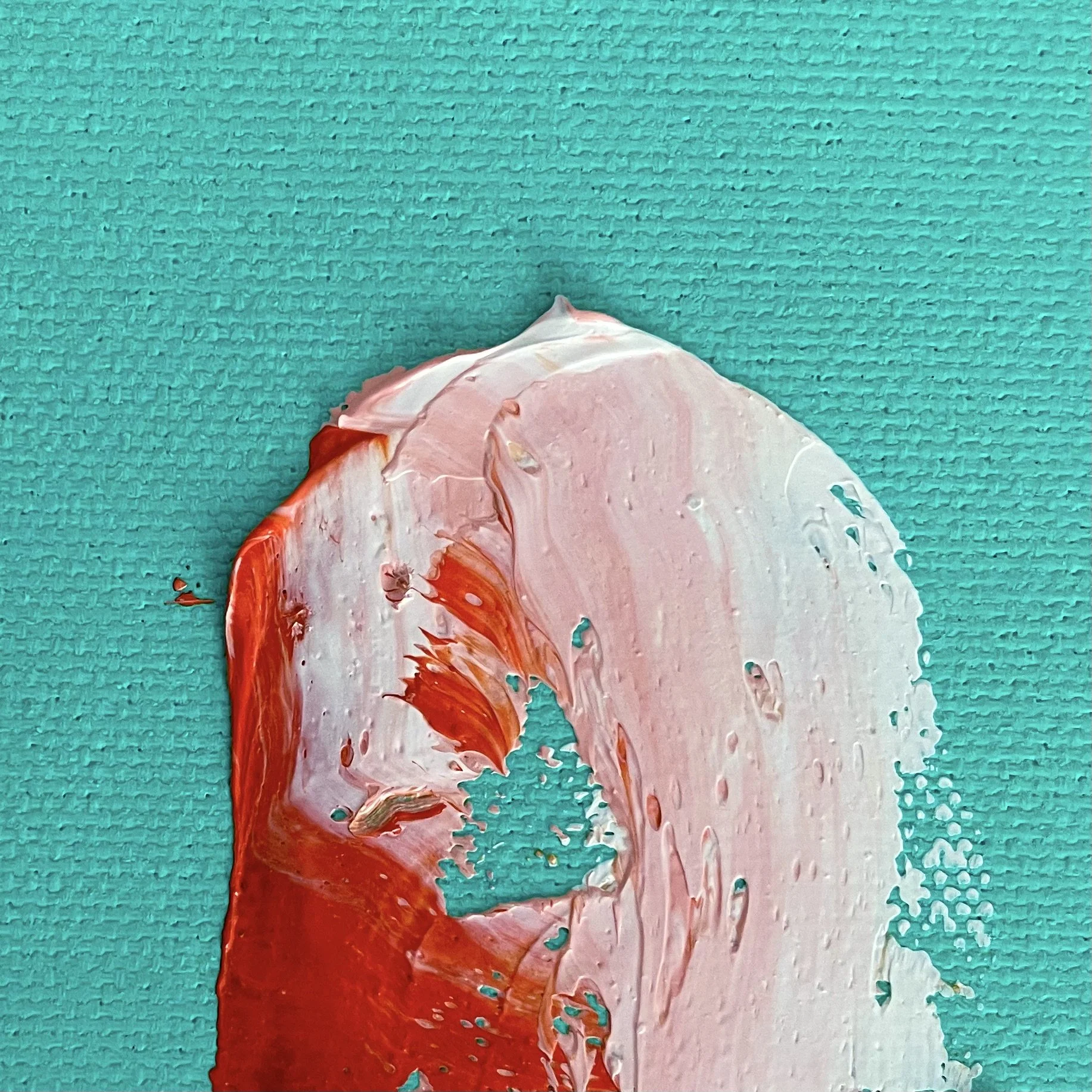
Ampliando un poco de foco, la superficie funciona con dos regímenes que conviven sin estorbarse. En unas zonas la pintura se extiende tan fina que se ve la trama del lienzo por debajo; en otras se acumula en empastes, arrastres y huellas de herramientas que guardan la presión exacta de la mano. Quedan a la vista velocidades muy distintas dentro de un mismo cuadro: un gesto largo aquí, una interrupción brusca allá, un apoyo breve que dejo marca y nadie corrigió después. Nada se ha tapado luego para que el conjunto resulta más presentable. La obra enseña cómo se hizo, y buena parte de su interés está en esa franqueza.
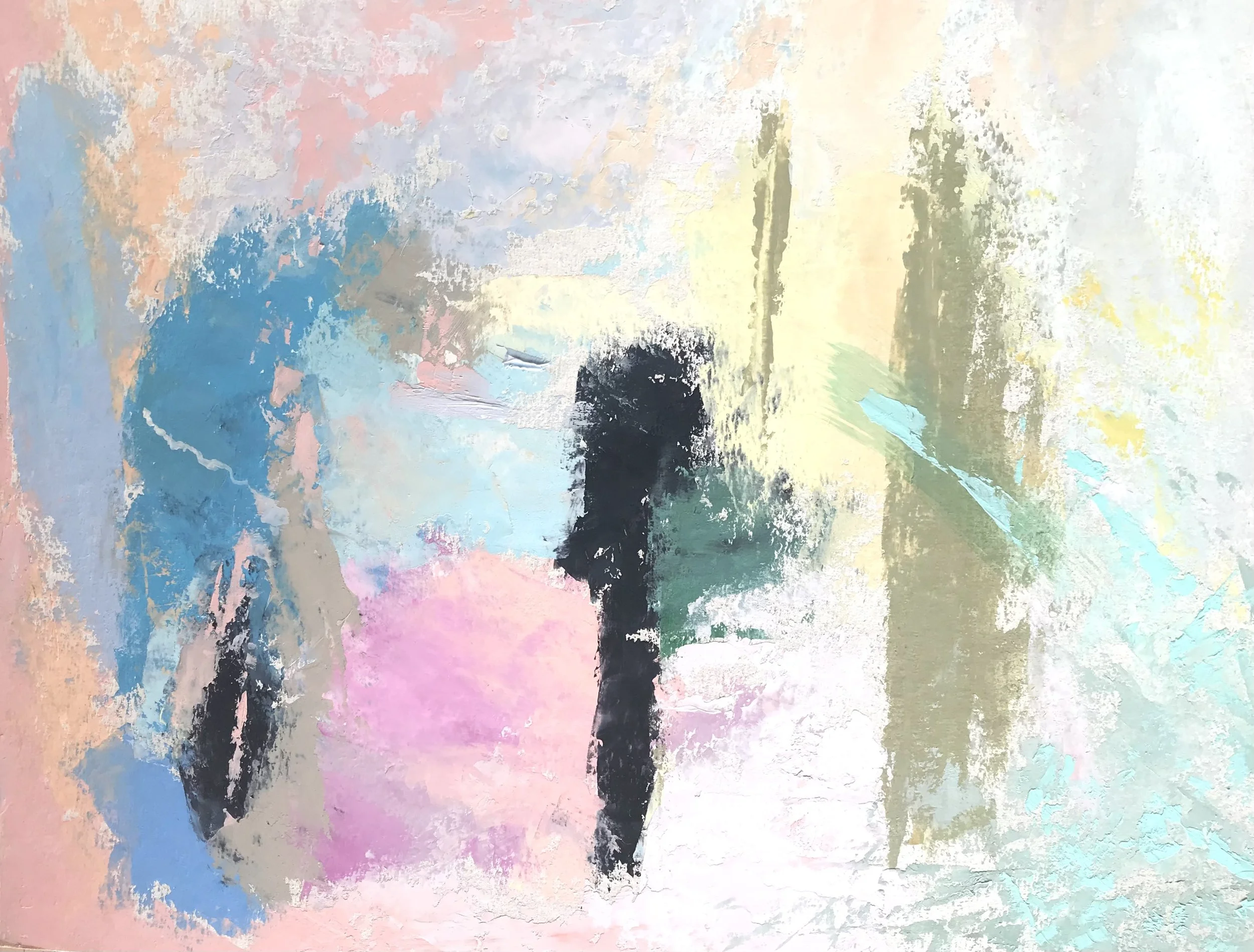
El Color se organiza en grandes extensiones de saturación pareja, recorridas por modulaciones mínimas, y cada campo instala su propio clima.: unos abren una mirada y la mandan lejos, otros vibran de frente y empujan la superficie hacia quien mira. La escala varía dentro del propio conjunto. Cumbre etérea junta en dos palabras el peso y la falta del peso, y Devenir señala lo que aún no ha terminado de formarse. En la amplitud de estos campos se reconoce la herencia de Helen Frankenthaler, aunque aquí la fluidez convive con una materia bastante más corpórea, y en los núcleos densos asoma la lección de Antoni Tápies: la superficie como acontecimiento, con su golpe y su rastro.
Mirar estos cuadros sigue un orden bastante natural. primero llega la extensión de color, que se impone de lejos y no admite discusión. después la mirada busca los puntos donde la materia se concentra, con Canto al ego como ejemplo de esta carga que reclama el centro. Y al fina vuelve a los bordes, que era donde estaba lo interesante desde el principio. Por eso hay que pensar bien dónde se cuelga una obra así. Una pintura de Navka reorganiza la pared entera: cambia la temperatura aparente de la habitación, obliga a los demás objetos a colocarse en relación con ella y convierte el hueco de la red que la rodea en arte activa del asunto. Con distancia suficiente, el color llega antes que uno mismo y deja la habitación entera avisada de que allí ocurre algo.
ANTONIO ÁNCHEZ
Director y curador de 1819 Art Gallery
The Void That Sustains
One of the pieces is called “Amoeba”; the title is not arbitrary. It names a body without a fixed outline, something that moves, pouring itself out, and that at every moment has a different form. It's best to start right there, at the edges, because in Navka's painting, the edge is where decisions are made. The matter thins until it ceases to be mass and merges into the background without any line announcing it. There is no cut: there is a loss of constancy, which is a rather destined phenomenon. From this way of finishing the forms, almost everything else can be deduced.
Broadening the focus a bit, the surface operates with two regimes that coexist without interfering with each other. In some areas, the paint is spread so thinly that the weave of the canvas is visible underneath; in others, it accumulates in impasto, drags, and tool marks that retain the exact pressure of the hand. Very different speeds are visible within the same painting: a long gesture here, an abrupt interruption there, a brief touch that left a mark and no one corrected afterward. Nothing has been covered up to make the whole more presentable. The work shows how it was made, and much of its interest lies in that frankness.
Color is organized into large expanses of even saturation, traversed by minimal modulations, and each field establishes its own atmosphere: some open up a gaze and send it far away, others vibrate head-on and push the surface toward the viewer. The scale varies within the whole. “Ethereal Summit” brings together in two words weight and weightlessness, and “Becoming” points to what has not yet finished forming. In the vastness of these fields, the influence of Helen Frankenthaler is recognizable, although here fluidity coexists with a considerably more corporeal materiality, and in the dense cores, the lesson of Antoni Tàpies emerges: the surface as an event, with its impact and its trace.
Looking at these paintings follows a fairly natural order. First comes the expanse of color, which imposes itself from afar and admits no discussion. Then the eye seeks the points where matter is concentrated, with "Song to the Ego" as an example of this weight that demands the center. And in the end, it returns to the edges, which is where the interesting part lay from the beginning. That's why you have to think carefully about where to hang a work like this. A painting by Navka reorganizes the entire wall: it changes the apparent temperature of the room, forces other objects to be positioned in relation to it, and transforms the gap in the surrounding netting into an active part of the subject matter. From a sufficient distance, the color arrives before you do and leaves the whole room alerted that something is happening there.
ANTONIO ÁNCHEZ
Director and curator of 1819 Art Gallery